The brief we set ourselves
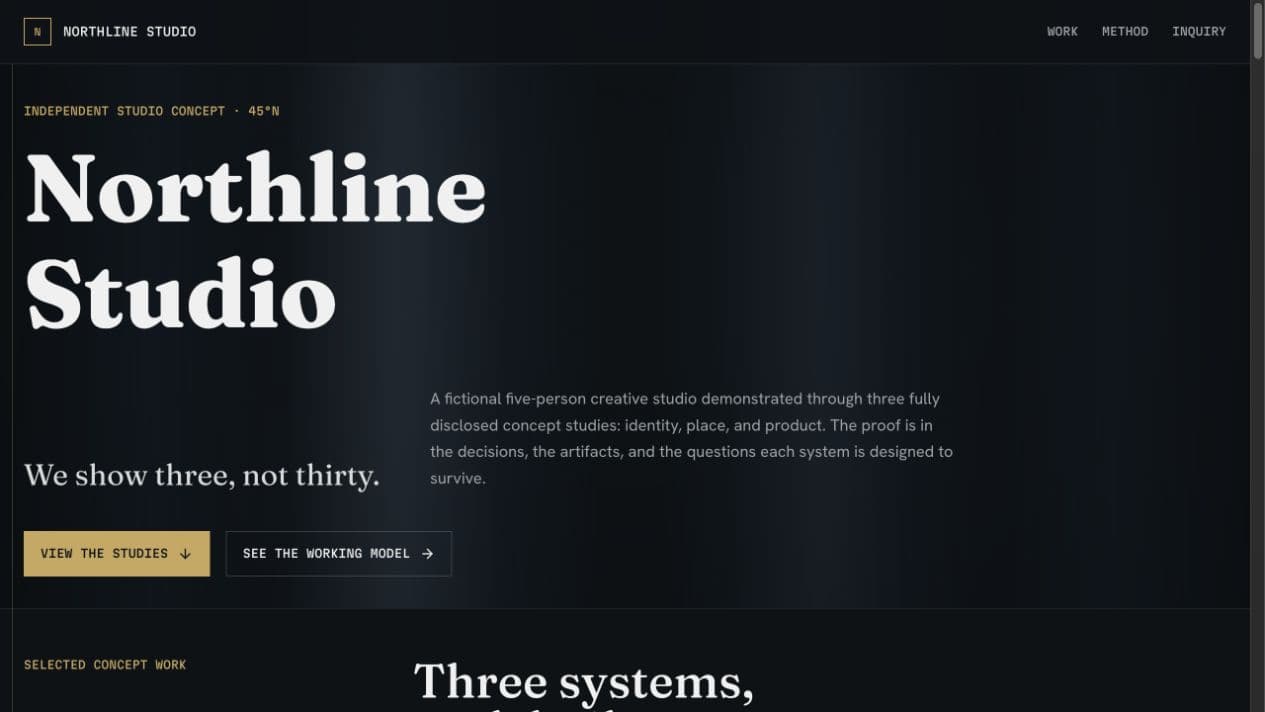
Design the site for a creative team whose work is genuinely excellent, and whose website compresses it into a wall of thumbnails that could belong to anyone.
The before-state this answers
Portfolio grids flatten judgment. Twelve projects at equal size say "we do lots of things" when the client is trying to hear "you understand my problem." The work carries all the weight, the thinking stays invisible, and inquiries arrive unqualified because the site never mentioned what engagements look like.
Direction
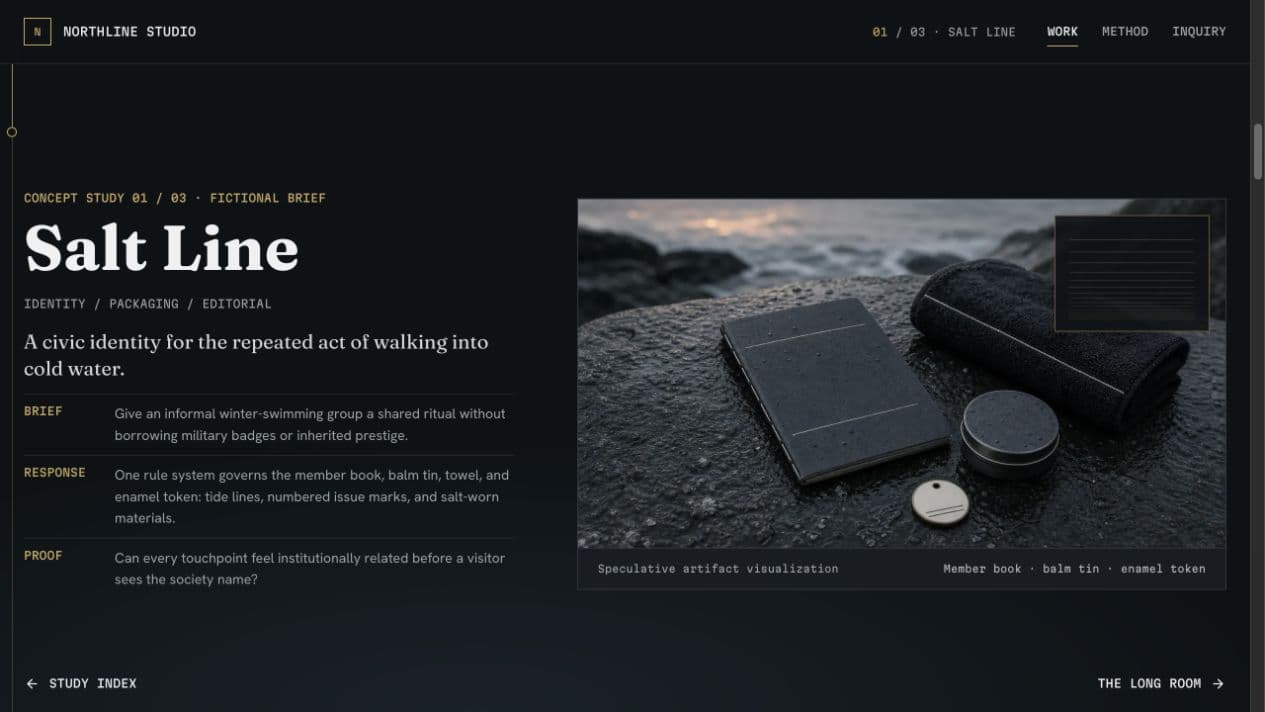
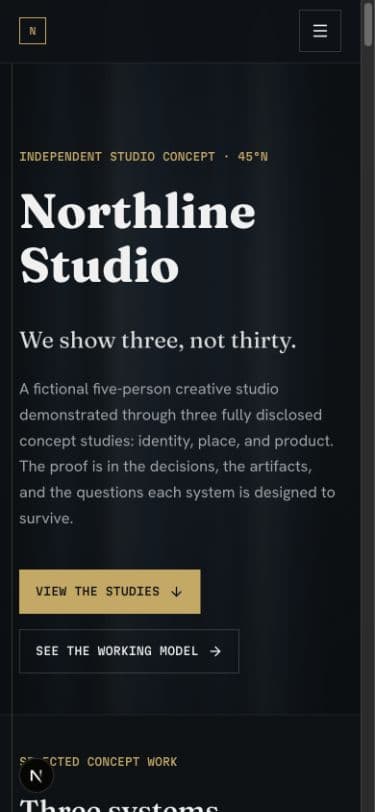
One project per viewport. Each case gets room to breathe: a full frame, a single sentence of context, and the confidence to let white space signal price. Typography leads the identity: a display voice with real character, set against restrained body text, so the studio's taste is legible before a single image loads.
Motion language
Gallery pacing. Projects advance with unhurried, deliberate transitions, the digital equivalent of walking a well-hung exhibition. Hover and transition states reward curiosity with directional cues while the case narrative carries the process, iterations, and thinking behind the polish.
Conversion structure
The path runs case, capability, engagement: every project narrative ends at what the studio actually sells, and the inquiry form asks about timeline and budget band up front, respectfully filtering the leads the team shouldn't take. Fewer inquiries, better ones.
What this demonstrates
How PixelSunset builds portfolio systems that sell the thinking behind the work, and put a velvet rope in front of the team's calendar. The same positioning, design, and engineering sequence drives an Orbit Build.