The situation
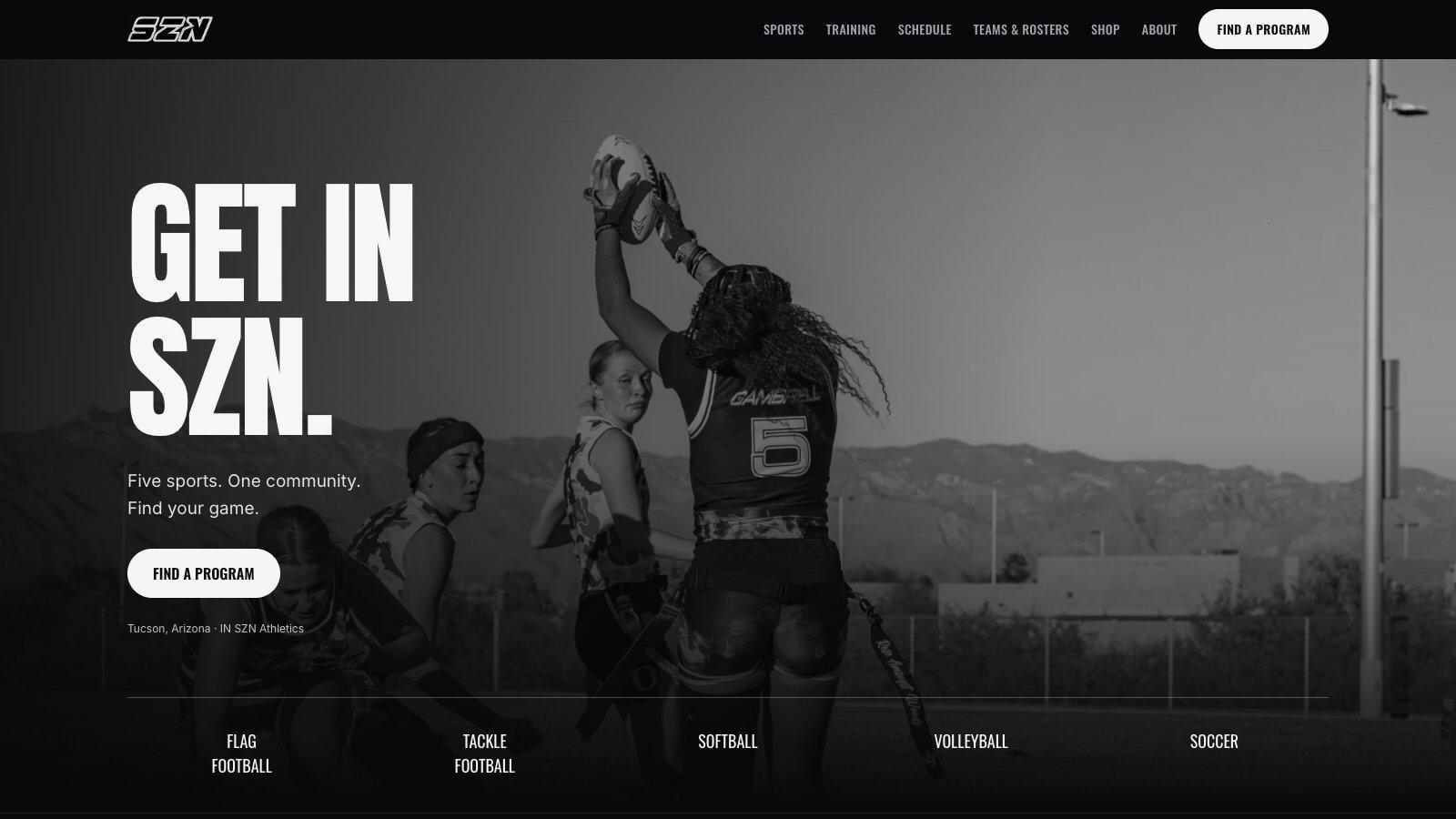
IN SZN Athletics is a Tucson community sports organization that grew past a single league: youth flag football, girls' and women's football, training, and events, on its way to five sports. Its website ran on Jersey Watch, which carried real operations, registration, payments, waivers, schedules, and communications, inside a generic league template the program did not control and could not grow.
What was leaking trust
The ceiling was control. The brand never got to look like the community it runs, program discovery was a directory of handoffs, and the data that matters most in youth sports, player and guardian information, lived in a third party's system by default. Every new idea, a shop, a new sport, a different kind of signup, had to fit someone else's platform first.
The build
The migration ran in phases, starting with a full audit of the public site and the Jersey Watch administration area in July 2026. The custom public website came first, keeping the operational handoffs families depended on. Native features replaced them one workflow at a time, as each form, data model, and admin tool was ready.
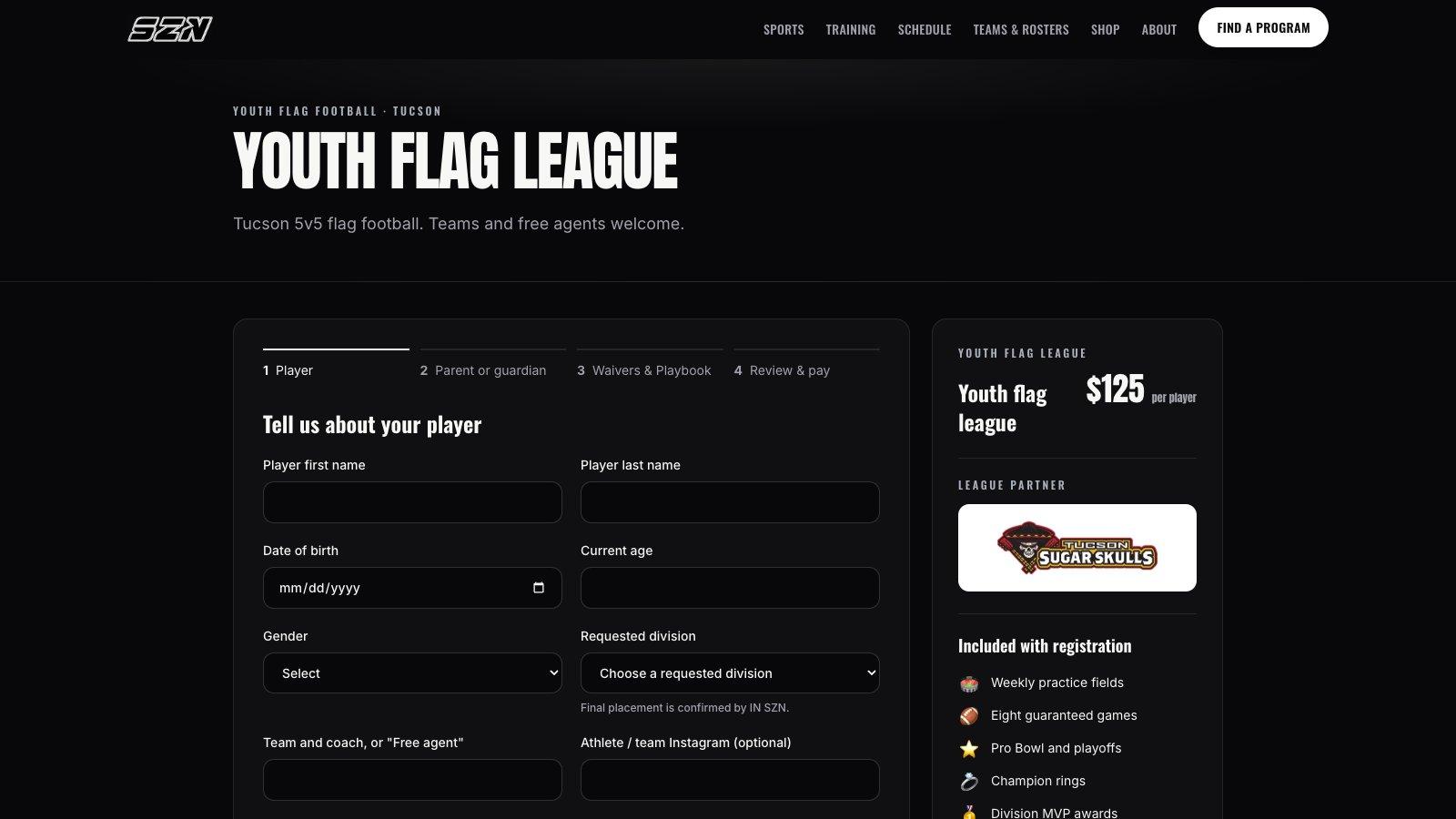
Registration is now native and built per program: youth flag football with private document upload and Shopify checkout, a tackle football intake covering equipment and fitting needs, women's team entry, coed registration, coach and referee interest, and a softball tournament signup that hands off to Zeffy for payment. Paid enrollment, free participation, and interest lists run as distinct flows, and an expression of interest is never presented as a confirmed roster spot. Payment events from Shopify reconcile back to each registration, and private athlete documents and form answers never enter Shopify order data.
Around registration sits the rest of the platform: a Shopify-connected Pro Shop that launched with 13 products, an owner dashboard for program publishing, registration review, team assignments, and roles, consent-aware public rosters, a Schedule & Scores system, and seven operational reports covering everything from equipment sizes to payment follow-up.
Design direction
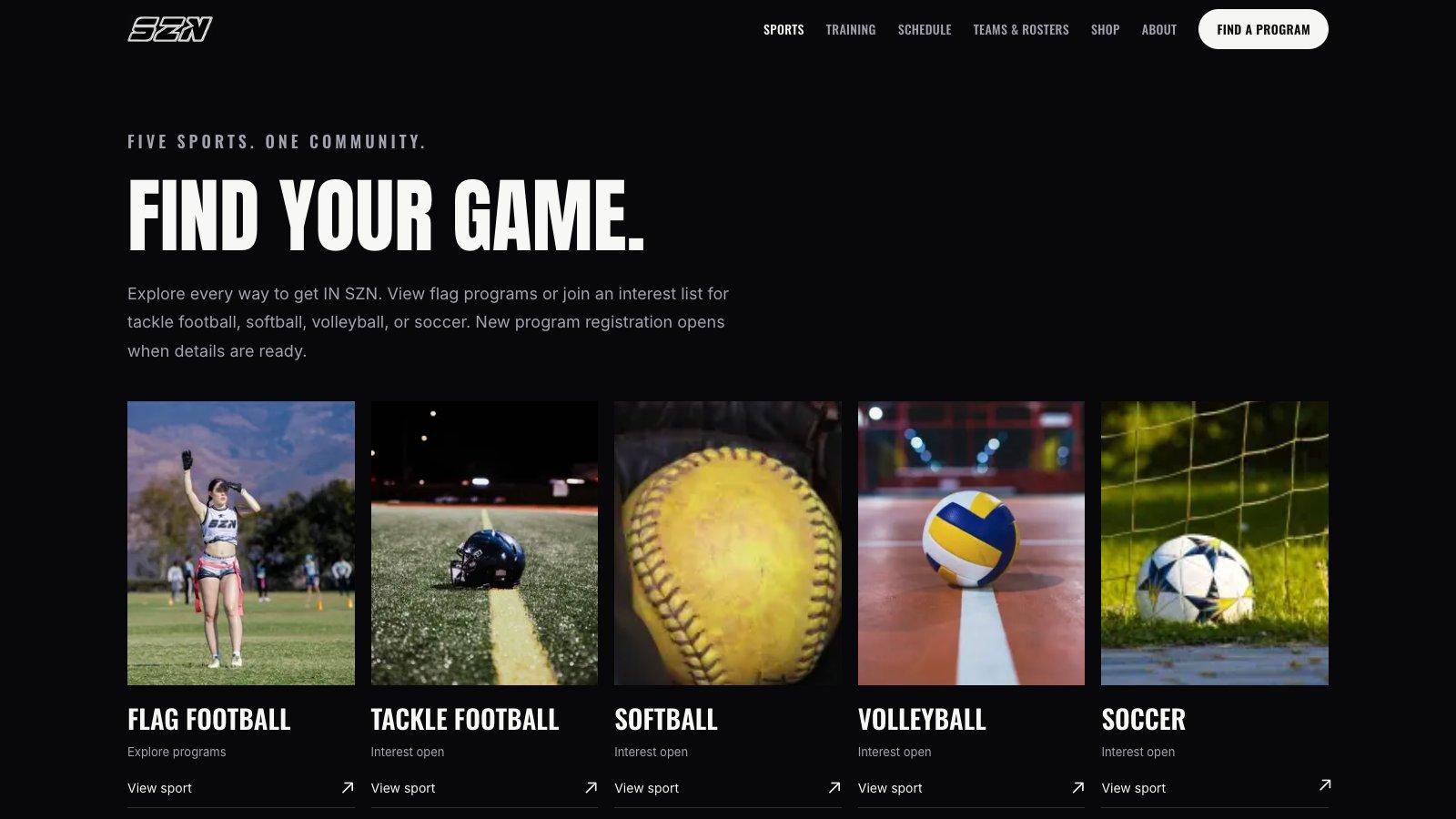
The visual system is called Tucson Steel: dark surfaces, condensed typography, steel tones, and strong photography drawn from IN SZN's Arizona setting. It was designed to read like sports coverage, not a league utility. As the organization expanded, the system stretched from a football-first site to a five-sport presentation, flag football, tackle football, softball, volleyball, and soccer, each with its own pages and a rotating photographic hero. Mobile behavior was built alongside desktop, including readable forms and motion that respects reduced-motion preferences.
Conversion structure
Program discovery starts with the sport, not a form. A family picks a sport, reviews the programs, and follows the flow that matches: paid enrollment into Shopify checkout, free registration, or an interest list. The owner controls program titles, dates, flyers, and publishing from the dashboard, and visibility and signup availability are separate switches, so a program can stay visible with its intake closed. The shop carries the same principle into commerce: browse, choose colors and sizes, keep a persistent bag, and check out without leaving the brand's own site until payment.
Outcome
IN SZN now runs on a platform of its own: five sports presented under one brand, native registration joined to payment status, a working storefront, rosters and schedules the staff publish themselves, and the reports they need to plan equipment, follow up payments, and see demand. The recorded automated suite stood at 147 passing tests at the November 7 release. No registration or revenue figures are published in this study; the change it documents is operational, in what the organization can now do without asking a platform for permission.